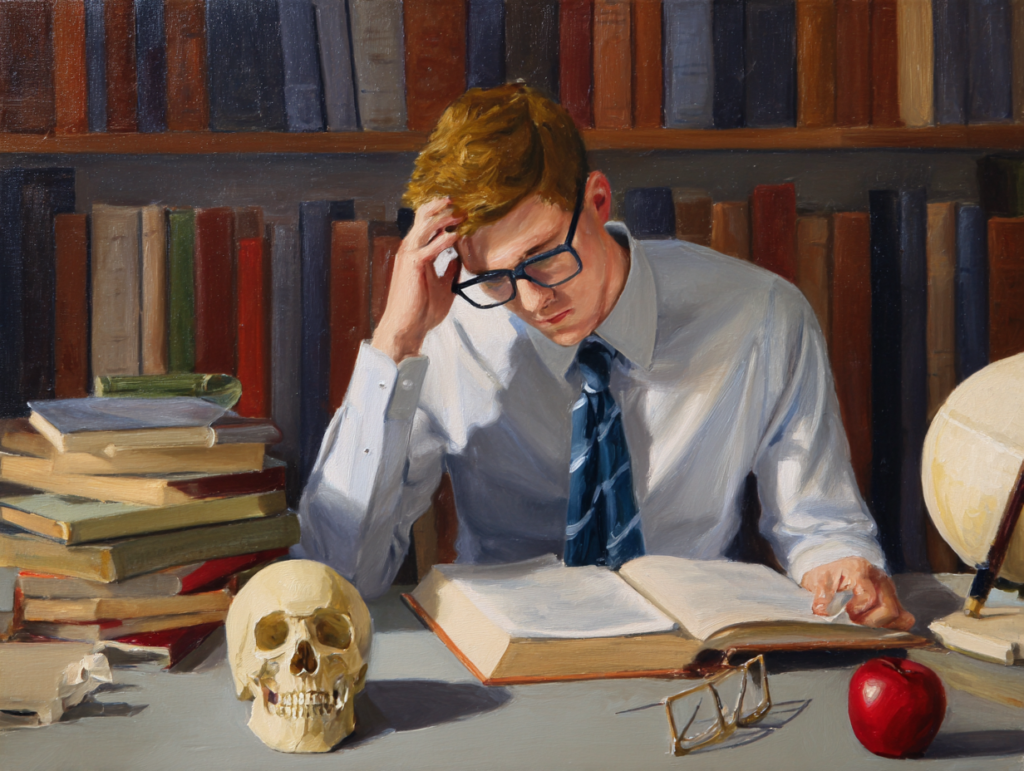
After plenty of play and experimentation with AI imagery, I found myself reacting viscerally to commentary and early scholarship that was pejorative about — or outright dismissive of — these outputs. The prevailing discourse treated AI images as a kind of slop monolith, when I found a lot of my generations to be fascinating, disturbing, amusing, and even beautiful. In response, I wrote this article, which presents a four-layer method for a structured, formal analysis of AI-generated images. The four layers are data, model, interface, and prompt, reflecting the mechanisms of generative AI technology. Each layer offers various considerations and questions to ask about actual outputs, encouraging researchers, students, educators, and commentators to move beyond dismissing these images as mere slop, and to begin considering them as cultural artefacts.
This piece is the foundation of all my work on genAI over the past two years (I hinted at its publication last year), and also the first where I’ve attempted to create a new method rather than just apply one. It’s also the first to really put forward my own take on media materialism, a philosophy and methodology that has guided my work for nearly ten years.
I am a big believer in close analysis, be it of texts, imagery, video, films: all the objects of culture. But I struggled for a long time to bridge that method with a context that made sense to me. In figuring out that the mechanisms of making were another foundational aspect of my work, it took me a few pieces to be able to make this connection, i.e. what I’ve nearly always tried to do is to consider how the means of an object’s production leave their mark on the object itself. It’s a simple conclusion, but it’s taken several attempts for me to articulate it in a way that felt satisfactory. This article feels like the first to actually explain it appropriately; the next step is to deploy the approach across other kinds of synthetic media and generative systems more broadly, but also to possibly return with this approach to cinema and TV.
Leave a Reply